





Shoulder pain stems from joint problems, soft tissue damage to muscles, ligaments, tendons or bursae, or referred pain from the neck, chest, or gallbladder, according to Mayo Clinic. Symptoms include aching, stiffness, weakness, popping, and soreness that worsens with movement. Crawley Physiotherapy assesses these symptoms to identify the true source and build an individualised recovery plan.
Key Takeaways
- Shoulder pain stems from joint issues or soft tissue damage affecting muscles, ligaments, tendons, and bursae.
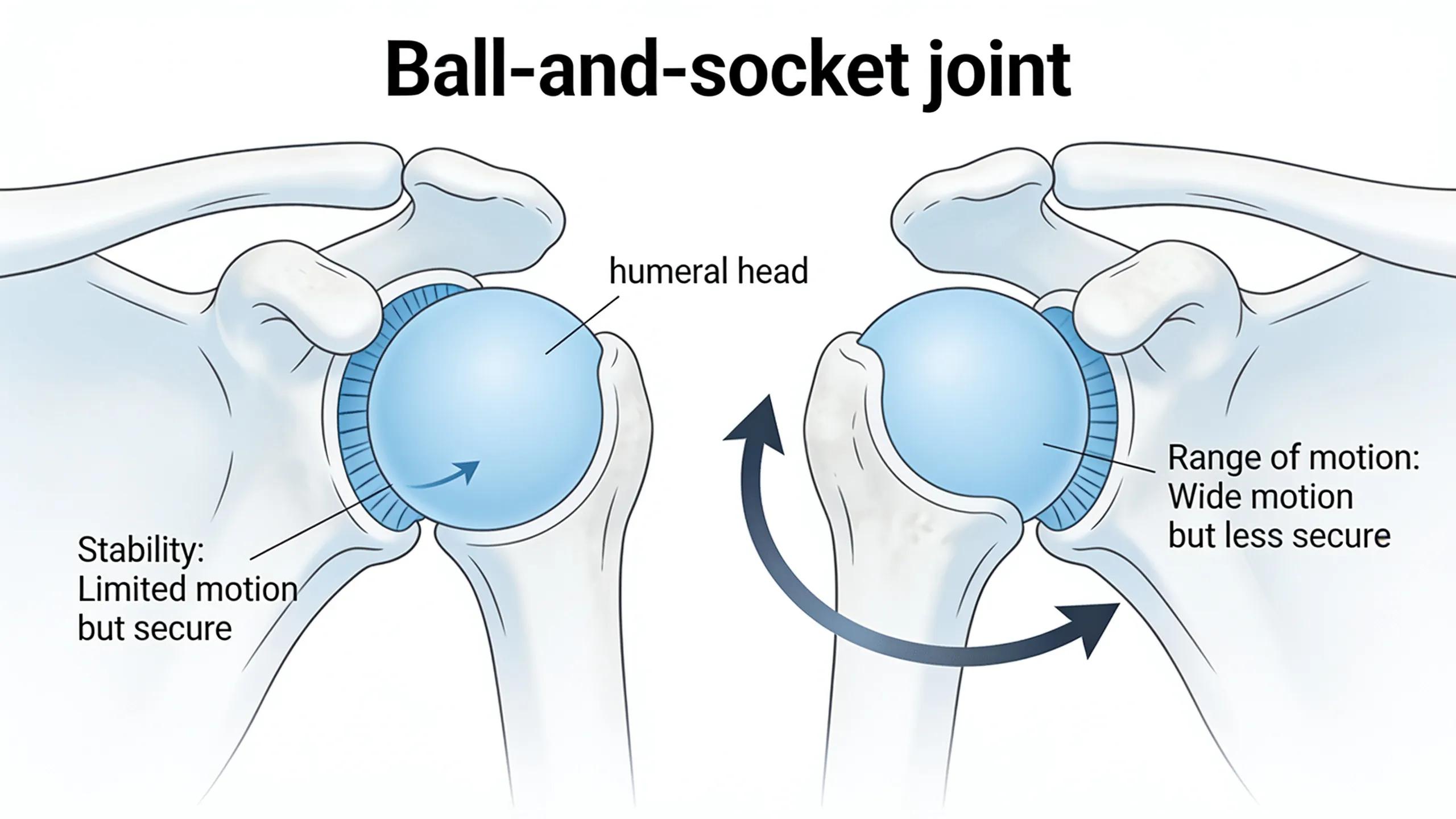
- The shoulder’s ball-and-socket design provides flexibility but creates inherent instability, increasing injury risk.
- Movement-related pain typically indicates joint involvement rather than surrounding soft tissue problems.
- Crawley Physiotherapy’s HCPC-registered physiotherapist treats shoulder pain with manual therapy and tailored exercise plans.
Why Is Your Shoulder So Prone to Pain?
A trade-off between mobility and stability makes the shoulder one of the body’s most vulnerable joints. The ball-and-socket structure works like a golf ball balanced on a tee, allowing the arm to reach, throw, and rotate in nearly every direction. That freedom of movement, though, leaves little holding the joint firmly in place.
This design explains why shoulder pain causes and symptoms vary so widely from person to person. Muscles, tendons, and ligaments must work overtime to keep the joint stable during everyday tasks. When those supporting structures weaken or become irritated, pain and stiffness often follow.
The scale of the problem is significant. Mass General Brigham reports that about one in four Americans experiences shoulder pain at some point in their life. That figure underscores how common—and how disruptive—this condition can be, whether it strikes suddenly during a workout or develops gradually from repetitive strain.
How Does Instability Lead to Injury?
Shoulder instability increases the risk of strains, impingement, and joint irritation because the surrounding soft tissue bears extra responsibility. Without consistent strength and mobility work, that tissue fatigues faster and pain becomes more likely to return.
What Helps Protect a Vulnerable Shoulder?
Targeted, professional care makes a measurable difference. Crawley Physiotherapy Clinic provides evidence-based physiotherapy in Crawley, addressing the root cause of instability rather than masking symptoms. Its HCPC-registered physiotherapist combines hands-on treatment with tailored exercise plans, helping strengthen the muscles that keep this naturally unstable joint supported and functioning well.

What Does Shoulder Pain Actually Feel Like?
Discomfort around the shoulder joint rarely shows up as one single sensation. Sufferers describe shoulder pain causes and symptoms ranging from a dull ache to a sharp popping feeling during everyday movement. Missing these early warning signs often means small issues turn into larger, harder-to-treat problems.
The sensation depends heavily on what’s driving it. Common presentations include:
- Weakness when lifting or reaching overhead
- Aching or throbbing that lingers at rest
- Stiffness that limits rotation or reach
- General soreness after activity
- Popping or clicking during motion
Some patterns offer useful clues. Pain that stems directly from the joint itself tends to worsen with arm or shoulder movement, a detail that helps distinguish joint-related pain from other sources. Discomfort that stays constant regardless of movement may point elsewhere entirely.
Why Does My Shoulder Hurt More When I Move It?
Movement-triggered pain usually signals that the joint structures themselves are irritated or damaged. Reaching, lifting, or rotating the arm stresses tissues that are already inflamed or worn. This pattern differs sharply from pain caused by issues elsewhere in the body, which typically doesn’t change much with shoulder use.
Should Stiffness Without Pain Still Be Checked?
Stiffness alone deserves attention, even without noticeable pain. Restricted range of motion often develops gradually and worsens if left unaddressed. Catching it early makes recovery faster and less complicated.
Crawley Physiotherapy’s HCPC-registered physiotherapist reviews these symptom patterns closely before building any treatment plan. That review shapes a hands-on approach paired with tailored exercises suited to the specific presentation. Patient education plays an equally important role, giving individuals a clearer understanding of what their symptoms actually mean and why targeted movement, not rest alone, supports genuine recovery.

Could Your Shoulder Pain Be Referred Pain?
Referred pain originates outside the shoulder joint entirely, often travelling from the neck, chest, or another region of the body. Distinguishing it from joint-based pain matters because the right treatment depends on finding the true source. Shoulder discomfort can stem from surrounding soft tissues, including muscles, ligaments, tendons, and bursae, rather than the joint structure itself. Pain rooted in the joint or these soft tissues usually intensifies with arm or shoulder movement.
Referred pain behaves differently. When another health condition sends pain signals to the shoulder, that discomfort typically stays steady regardless of how the arm moves. A patient who feels no change in pain intensity during shoulder exercises may be dealing with an issue elsewhere in the body, not a local shoulder injury.
How can someone tell if shoulder pain is referred or joint-related?
Movement offers the clearest clue. Joint and soft-tissue pain generally worsens with reaching, lifting, or rotating the arm, while referred pain remains largely unaffected by these actions. Tracking pain patterns during daily movement gives useful information before an appointment.
Why does the source of shoulder pain matter for treatment?
Treating the wrong source wastes time and delays relief. Crawley Physiotherapy Clinic applies an evidence-based approach to separate genuine shoulder-based pain from discomfort referred from another area. This distinction shapes every recommendation that follows, from hands-on care to home exercise.
Crawley Physiotherapy Clinic’s HCPC-registered physiotherapist does not rely on generic checklists. Each patient receives an individual assessment, followed by hands-on treatment and a tailored exercise plan built around their specific findings. That careful, personalised process reflects Crawley Physiotherapy’s consistent promise: real relief starts with understanding the true cause of the pain, not just treating where it hurts.

Which Shoulder Structures Are Commonly Injured?
Three bones form the shoulder: the humerus, scapula, and clavicle. Together, these bones create four separate joints, each capable of its own distinct injury pattern. Understanding this anatomy helps explain why shoulder pain shows up in so many different forms and locations.
The main shoulder joint works like a ball resting on a small platform rather than a deep socket. Because the joint isn’t tightly secured, the rounded head of the humerus can shift more easily than in other joints of the body. This loose arrangement gives the shoulder its wide range of motion. It also leaves the joint prone to instability, dislocation, and soft-tissue strain.
What Parts of the Shoulder Get Injured Most Often?
Damage typically clusters around a few key structures rather than the bones themselves. Common injury sites include:
- Rotator cuff tendons, which stabilise the joint during arm movement
- Ligaments connecting the collarbone and shoulder blade
- Bursae, the fluid-filled cushions that reduce friction between moving parts
- The joint capsule surrounding the ball-and-socket structure
Each structure responds differently to injury, which is why an accurate assessment matters before treatment begins.
How Does Physiotherapy Treat These Different Structures?
Treatment depends entirely on which structure sustained the damage. Crawley Physiotherapy Clinic offers manual therapy. Exercise therapy tailored to the specific tissue involved in each shoulder injury, rather than applying a single generic protocol.
An HCPC-registered physiotherapist at Crawley Physiotherapy Clinic combines hands-on treatment with exercise plans matched to the injured structure. A rotator cuff strain calls for a different loading approach than a ligament sprain or bursal irritation. This distinction shapes every stage of care.
Assessment and treatment at Crawley Physiotherapy Clinic follow evidence-based physiotherapy practice throughout. That foundation allows patients to move forward with confidence, knowing their care plan reflects the structure actually causing their pain rather than a one-size-fits-all routine.
When Does Shoulder Pain Need Urgent Care?
Urgent evaluation becomes necessary when shoulder pain follows an injury and produces sudden, sharp, or stabbing sensations alongside limited arm movement. Two categories of shoulder pain causes and symptoms stand out as red flags: injury-related trauma and pain that disrupts basic daily function. Waiting too long to address either one risks prolonged recovery and worsening joint damage.
Not every ache demands immediate attention, but certain signals do. Injury-related shoulder pain often arrives without warning. Limits how far the arm can move, making everyday tasks like reaching overhead or lifting a bag genuinely difficult.
What symptoms mean a shoulder problem is serious?
Pain severe enough to wake someone during the night. That prevents sleep altogether, points to a problem serious enough for prompt medical evaluation. This kind of persistent discomfort differs from routine soreness that eases with rest. Sharp pain paired with restricted motion after a fall, collision, or lifting injury deserves the same urgency.
Who can help decide if shoulder pain needs urgent treatment?
Crawley Physiotherapy Clinic’s HCPC-registered physiotherapist assesses shoulder symptoms. Determines whether a case calls for urgent medical referral or a structured physiotherapy plan. This clinical judgement matters, since some shoulder conditions mimic minor strains while masking more serious joint or soft-tissue damage.
The table below offers a quick way to gauge urgency:
| Symptom Pattern | Suggested Action |
|---|---|
| Sudden, sharp pain after injury with limited movement | Seek prompt evaluation |
| Pain that wakes you at night or blocks sleep | Seek prompt evaluation |
| Mild stiffness or soreness without injury | Consider a physiotherapy assessment |
Anyone unsure which category their symptoms fall into can call Crawley Physiotherapy directly at 07490 072592 for guidance. A brief conversation often clarifies next steps and prevents unnecessary worry. Crawley Physiotherapy remains committed to helping patients move without pain, one personalised treatment plan at a time.
How Do Physiotherapists Identify the Cause?
Physiotherapists begin by listening carefully to the patient’s account of their symptoms. A detailed assessment starts with the patient’s own story, not a checklist. Understanding when the pain started, what makes it worse, and what daily activities feel limited helps the clinician build an accurate picture of shoulder pain causes and symptoms before any hands-on testing begins.
Clarifying recovery goals matters just as much as identifying the injury itself. A patient hoping to return to swimming needs a different plan than someone simply trying to sleep without discomfort. This conversation shapes every decision that follows.
What Happens During a Physiotherapy Assessment?
The physiotherapist combines the patient’s history with physical testing, checking range of motion, strength, and specific movement patterns that reproduce or ease the pain. At Crawley Physiotherapy Clinic, this process is led by an HCPC-registered physiotherapist who translates findings into a hands-on treatment approach paired with a tailored exercise plan. Nothing about the plan is generic; it reflects what the assessment actually reveals.
Why Does an Accurate Diagnosis Matter?
Guesswork prolongs pain and risks worsening the underlying problem. Diagnosis and treatment decisions at Crawley Physiotherapy Clinic follow evidence-based physiotherapy principles, meaning recommendations rest on established clinical reasoning rather than assumption. Patients gain confidence knowing their care plan traces back to a proper evaluation, not a one-size-fits-all template.
This careful, listening-first approach has helped build a strong reputation across the local community. Crawley Physiotherapy Clinic has earned more than 253 Google reviews, a reflection of patients who found clarity and relief after a thorough assessment. For anyone unsure why their shoulder hurts or how serious it might be, that kind of track record offers real reassurance before treatment even begins.
What Treatments Actually Relieve Shoulder Pain?
Effective relief starts with conservative care, not surgery. Bracing, medication, and structured physical therapy typically come first, reserving surgical options for cases that fail to respond. This stepwise approach protects patients from unnecessary procedures while giving the shoulder joint every chance to heal naturally.
Crawley Physiotherapy Clinic builds recovery plans around four core elements: manual therapy, exercise therapy, postural correction, and patient education. Manual therapy loosens stiff tissue and restores joint mobility through hands-on techniques. Exercise therapy rebuilds strength around the shoulder, targeting the muscles that stabilise the joint during daily movement. Postural correction addresses the alignment issues that often feed chronic shoulder strain. Patient education equips each person with the knowledge to manage symptoms and prevent flare-ups going forward.
Who Provides This Treatment?
An HCPC-registered physiotherapist leads care at Crawley Physiotherapy Clinic, pairing hands-on treatment with an exercise plan tailored to each patient’s specific injury and goals. This registration confirms the clinician meets recognised standards for safe, competent practice. Rather than applying a one-size-fits-all protocol, the physiotherapist adjusts the plan as recovery progresses, tracking mobility gains and pain reduction along the way.
Is the Treatment Backed by Research?
Yes. Every recommendation made at Crawley Physiotherapy Clinic rests on evidence-based physiotherapy practice, meaning techniques reflect current clinical understanding rather than guesswork. Patients gain confidence knowing their care plan draws from established methods proven to support shoulder recovery.
Consider the treatment building blocks side by side:
| Treatment Element | What It Addresses |
|---|---|
| Manual therapy | Joint stiffness and restricted movement |
| Exercise therapy | Muscle weakness and instability |
| Postural correction | Underlying alignment problems |
| Patient education | Long-term symptom management |
Delaying care allows compensatory habits to take hold, often deepening pain and limiting mobility further. Crawley Physiotherapy Clinic remains committed to helping every patient move without pain and live life to the fullest.
Ready to Get Your Shoulder Assessed?
A professional evaluation identifies the root cause of shoulder discomfort and maps out a clear path toward relief. Crawley Physiotherapy sits in Crawley, West Sussex, giving local residents a convenient option for hands-on assessment and treatment. Delaying an evaluation often means living longer with shoulder pain causes and symptoms that could otherwise be addressed early. Stiffness or weakness limits daily activities like dressing, driving, or reaching overhead.
Shoulder pain touches a significant portion of the population at some point in life. Effective treatment exists for nearly every case, and most patients regain function and return to the activities they enjoy. Waiting rarely improves the outcome; a timely assessment usually does.
How does someone book a shoulder assessment?
Scheduling care takes only a phone call or a short email. Patients can reach Crawley Physiotherapy directly at 07490 072592 to discuss symptoms and arrange a convenient appointment time. Those who prefer written communication can email info@crawleyphysiotherapy.co.uk to request an assessment or ask questions before committing to a visit.
What happens during a first shoulder visit?
The initial session focuses on understanding the specific pain pattern, movement limitations, and daily impact reported by the patient. A clinician examines range of motion, strength, and areas of tenderness to narrow down the likely cause. From there, a tailored plan takes shape, built around the individual rather than a generic protocol.
Booking options at a glance:
| Method | Contact | Best For |
|---|---|---|
| Phone | 07490 072592 | Quick scheduling, urgent questions |
| info@crawleyphysiotherapy.co.uk | Detailed inquiries, flexible timing |
Shoulder discomfort rarely resolves on its own once it starts interfering with sleep or daily tasks. Reaching out early gives Crawley Physiotherapy the chance to catch problems before they worsen. The practice stands ready to help every patient move without pain and live without limitation.
FAQ
What causes shoulder pain?
Shoulder pain stems from joint problems, soft tissue damage to muscles, ligaments, tendons or bursae, or referred pain from the neck, chest, or gallbladder.
What are the common symptoms of shoulder pain?
Symptoms include aching or throbbing, stiffness limiting rotation or reach, weakness when lifting or reaching overhead, general soreness after activity, and popping or clicking during motion.
How does Crawley Physiotherapy treat shoulder pain?
Crawley Physiotherapy Clinic’s HCPC-registered physiotherapist combines hands-on treatment with tailored exercise plans, strengthening the muscles that support the shoulder joint and addressing the root cause of instability.
Conclusion
In closing, shoulder pain stems from various causes—ranging from rotator cuff injuries and frozen shoulder to postural strain and overuse—each presenting distinct symptoms that warrant professional evaluation. Recognising these warning signs early empowers you to seek appropriate treatment before the condition worsens. Evidence-based physiotherapy addresses the root cause of your discomfort through hands-on treatment and tailored exercise plans, restoring strength, mobility, and function to get you back to the activities you value most.
